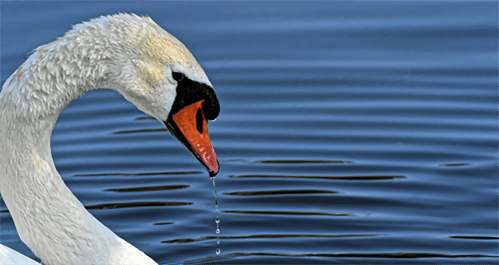
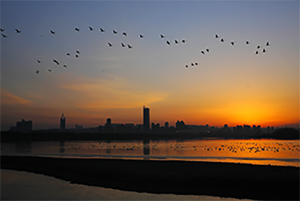
The Number of Swan in Sanmenxia This Winter Has Exceeded Ten Thousand
On December 6th, news from the Yellow River Wetland Management Office of Sanmenxia said that more than ten thousand white swans had flown to Sanmenxia to spend winter. Besides the around 4,000 white swans in the Swan Lake National Wetland Park, the Laocheng and Houdi of Lingbao also became the biggest gathering area of white swans, with over 6,000. At the same time, Wangguan of Hubin District, Beiying Village of Shanzhou District, the Yellow River Park and other places also got the white swans’ favour. Up to now, the gathering of white swans in Sanmenxia has expanded from the one point of the Swan Lake to a viewing “chain”.
According to information, since this year, on the premises of vigorously carrying out the epidemic prevention and control measures, Sanmenxia Forestry Bureau found the proper position of Sanmenxia forestry in the major national strategy of the ecological protection and high-quality development of the Yellow River Basin and took the initiative to make efforts and overcome the difficulties. It promoted the process of the ecological protection project of the Yellow River Wetland using multiple measures and built the hundred-mile ecological corridor of the Yellow River, making a strong contribution to the ecological protection and high-quality development of the Yellow River Basin of Sanmenxia. First, strictly implement the White Swan and Its Habitat Protection Regulation of Sanmenxia and manage in accordance with rules and regulations. Secondly, strengthen daily management. It has erected 440 boundary markers, 200 warning signs, ten district monuments and seven sign gates to ensure that the boundaries of the conservation area are clear. Thirdly, invest more than 1.8 million yuan in building a remote wireless digital video surveillance system and set up “sky eye” to enhance the wetland protection capability. Fourthly, upgrade the wildlife rescue center, purchase rescue facilities and train professional staff to improve the wildlife rescue level. Fifthly, publish the Scientific Survey of the Sanmenxia Section of the Henan the Yellow River National Nature Reserve and the Yellow River Wetland Birds in Sanmenxia, making up the blank of the “natural resources” and “bird files” of the Sanmenxia Section of the Yellow River Basin. The two scientific results, the Yellow River Wetland Bird Resource Investigation and Research on the Protection Measures in Sanmenxia and Investigation and Research of the Yellow River Wetland Plants in Sanmenxia won “the First Prize of Scientific and Technological Achievements of Henan Provincial Department of Forestry” successively, providing scientific basis for the protection of the animal and plant resources of the Yellow River wetland as well as scientific basis and technical support for wetland protection. Sixthly, further improve the public awareness of “caring about the wetland and protecting the swan” through wide publicity, relying on the activities such as “World Wetland Day”, “Love Birds Week” and “the White Swan Protection Day” and adopting both online and offline measures to make the city card of “the Yellow River Sanmenxian, Beautiful Swan City” shine more brightly.
Through system management and ecological restoration, the ecological functions of the Yellow River Wetland Reserve in Sanmenxia have been fully restored, and four whooper swan habitats have been added. According to statistics, the number of wild bird species recorded have increased from 16 orders, 42 families and 175 species since the establishment of the reserve to the current 18 orders, 57 families and 279 species, and 2 orders, 15 families and 104 species have been newly added. The number of overwintering whooper swans has increased from 2,000 since the establishment of the reserve to more than 10,000 last year, accounting for two-thirds of the total number of overwintering swans in the whole country, making it the largest swans habitat and viewing area. At the same time, in recent years, our city has continuously monitored the great bustards, black storks and other national first-class protected animals, and national second-class protected animals such as tundra swans and mute swans overwintering in the Yellow River Wetland Reserve. The ecological environment of the Yellow River wetland has been significantly improved. This year, the Ministry of Ecology and Environment carried out management and protection effectiveness evaluation on the Sanmenxia section of the Henan Yellow River Wetland National Nature Reserve. The expert group agreed that the Sanmenxia Yellow River Wetland is the best protection area among the three national natural reserves and eight management agencies of the Yellow River Basin in Henan which gives the fullest play to the function of the management and protection effectiveness evaluation and has the best management and protection effectiveness. In particular, the protection measures for whooper swans are perfect and the results are remarkable, especially the publicity, education, patrol, monitoring, and recording are well-done, and the legal guarantee is worth sharing and promoting.
In the next step, the Municipal Forestry Bureau will call for a brand name, “the Yellow River Sanmenxian, Beautiful Swan City”. Strengthen two protections: one is to strengthen the ecological protection of wetlands, and the other is to strengthen the protection of white swans. Use the strictest regulations, systems and management to crack down on behaviors that endanger wild animals such as the whooper swan in accordance with the law, and promote the “long-term stability” of the white swan habitat. Highlight three key points: one is to strictly adhere to the bottom line of ecological protection, the second is to increase ecological restoration, and the third is to carry out in-depth scientific research and develop wetland projects to promote the high-quality development of the Yellow River wetlands, in order to build an ecological gallery with “smooth river, clear water, green shore and beautiful scenery” where people along the Yellow River live in harmony with nature.